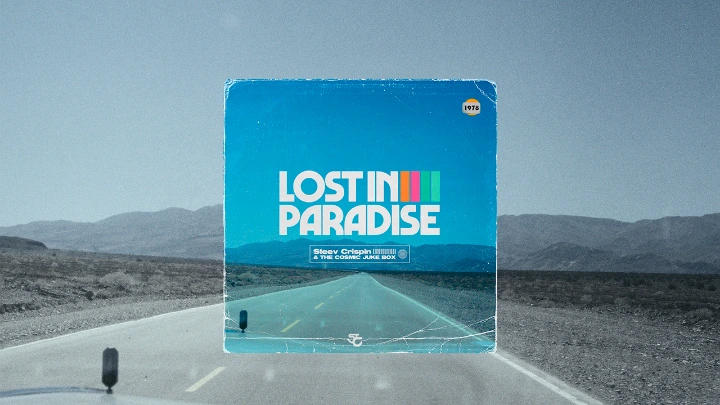
Choice Is the Work
Before I talk about gear, tape, or any production decision, I want to say something that took me years to understand properly.
When you know what you want, you make the right choices. The vision is clear. The direction is clear. The intention is clear. Every decision follows naturally from the one before it, because you have a North Star.
When you don't know what you want, you don't actually make choices at all. You defer. You accumulate options. You keep every door open because closing one feels like losing something. And the more you defer, the more likely you end up with something that never gets finished, always improvable, always adjustable, never done.
Most unfinished records aren't unfinished because the artist ran out of ideas. They're unfinished because the artist never decided what they were making in the first place.
"Lost In Paradise" had to be different. It had to start from a place of knowing — and every production decision had to flow from that.
How I Made "Lost In Paradise" and the Ambition Behind the Song
When I started working on "Lost In Paradise," I already knew what kind of record I wanted to make. Not in a genre sense, not "this should sound like this band" or "this needs to hit this tempo." I mean I had a feeling. A color. Something with weight and warmth and a 70s soul that had nothing to do with nostalgia and everything to do with intention.
The debut single for Steev Crispin & The Cosmic Jukebox had to be the right opening statement. That kind of ambition either makes you work harder or makes you freeze. I chose a third option: I put constraints on myself that made it almost impossible to hesitate.
Once the vision was clear, the constraints weren't a sacrifice. They were the only logical response to knowing what you're after.
The Machine That Taught Me How to Think
In 1995, I was 15. There was no internet, at least not in any form that a kid in Belgium could use to find a plugin or download a preset. Gear was expensive. If you wanted a pedal, you went to a shop, you tried it, you saved up. You couldn't browse a marketplace and buy a virtual version of it for €9. If you wanted a sound and didn't know how to get it, you had to build it yourself. You had to invent it from what was in front of you.
That scarcity was school. It forced invention. It forced commitment. It forced the kind of creative thinking that happens when you have no escape hatch.
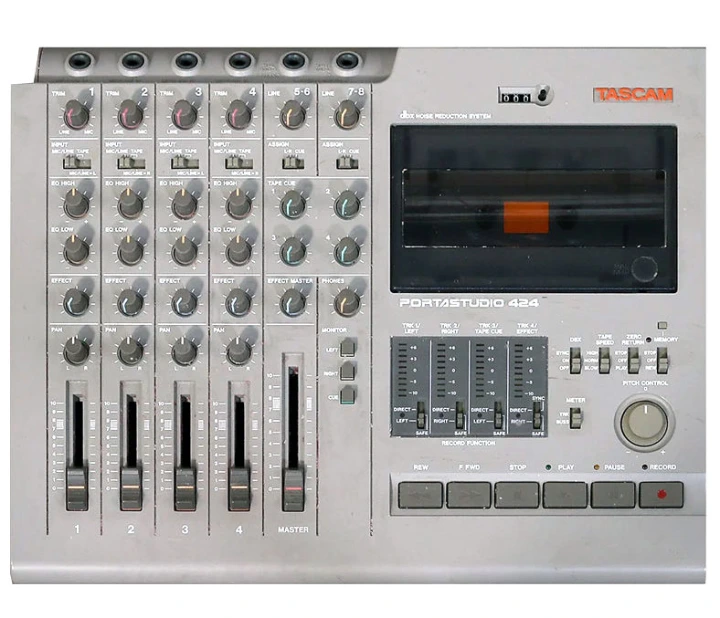
The machine that cemented all of that for me was a Tascam 424 MK1.
For those who don't know it: a 4-track cassette recorder. Four tracks. Cassette tape. That's it.
You couldn't stack 40 guitar takes and pick your favorite later. You recorded, you committed, and you moved on. The machine didn't give you the option to second-guess yourself, because there was literally no room. Every choice was final.
I wasn't trying to go back to using one when I made "Lost In Paradise." I didn't want the limitations of tape, I wanted the discipline that tape forced on me. That's a very different thing.
Working this way in 2026 felt completely refreshing. Not nostalgic, refreshing. Like remembering a mode of thinking I'd let slip.
The Tascam 424 MK1 didn't just teach me production. It taught me how to decide.
What the Beatles Already Knew
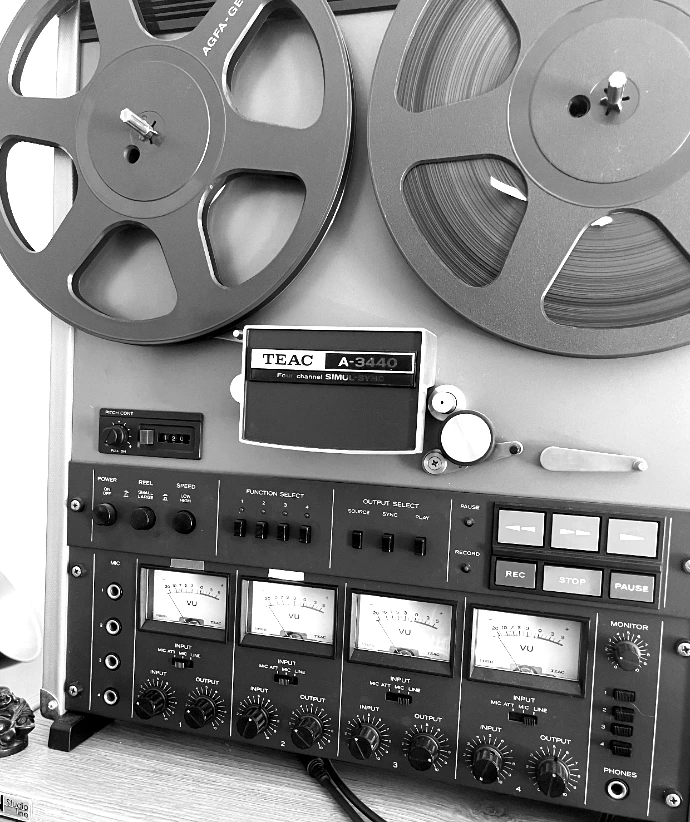
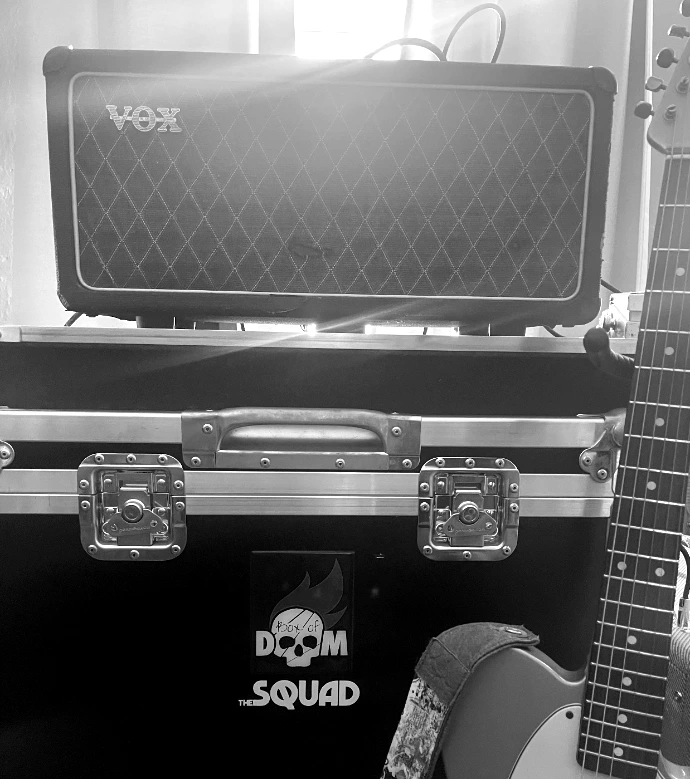
Every Beatles album was recorded on four tracks. From Please Please Me all the way through Abbey Road was one of the first sessions where a more modern desk entered the picture, but even then, the mindset barely changed. Each had a Vox amp. A Gretsch or a Rickenbacker. No massive backline. Less gear than most bedroom producers have today.
And yet — some of the greatest music ever made came out of those sessions.
Because they focused on what mattered: the efficiency of the melody, the precision of the part, the logic of the arrangement. The sound wasn't secondary, but they made it work with what they had. They gave meaning to creativity by pointing all their attention at the music itself, not at the options surrounding it.
They didn't have the luxury of infinite takes or infinite choices. Every arrangement decision carried weight because it had to. The constraint didn't kill the music. The constraint was the music.
That's what I kept coming back to on this record through 4 different versions.
The Trap That Modern Studios Build for You
Here's what nobody tells young producers: the tools that give you total freedom can quietly destroy your music.
When you open Logic Pro or Pro Tools or any modern DAW, you have unlimited tracks. Unlimited plugins. The ability to revisit, reverse, undo, re-route, reamp, replace, and second-guess every single decision at any point in the process. That sounds like power. What it actually is, is paralysis in slow motion.
You keep adding options instead of making choices. You defer the hard calls "we'll fix it in the mix," "I'll swap that amp out later," "let me try three more takes and pick one tomorrow." And slowly, without noticing it, you stop being a producer making decisions and start being a curator of infinite possibilities.
I've seen it happen. I've felt it happen to me.
Think about it this way: it's the Netflix Syndrome. You sit down in the evening to watch a film. You open the catalogue. There are thousands of titles. You scroll for 25 minutes because there might always be something better, something more right for your mood, something you haven't discovered yet. And then you never actually watch anything, or you settle for something you've already seen because at least you know it won't disappoint you.
The same thing happens in the studio with plugins, virtual instruments, and presets. Endless scrolling through options. Never committing. Never connecting. The result is impersonal, prefabricated sound, the audio equivalent of a TV dinner. It looks like food. It's technically edible. But nobody made it with their hands in a kitchen.
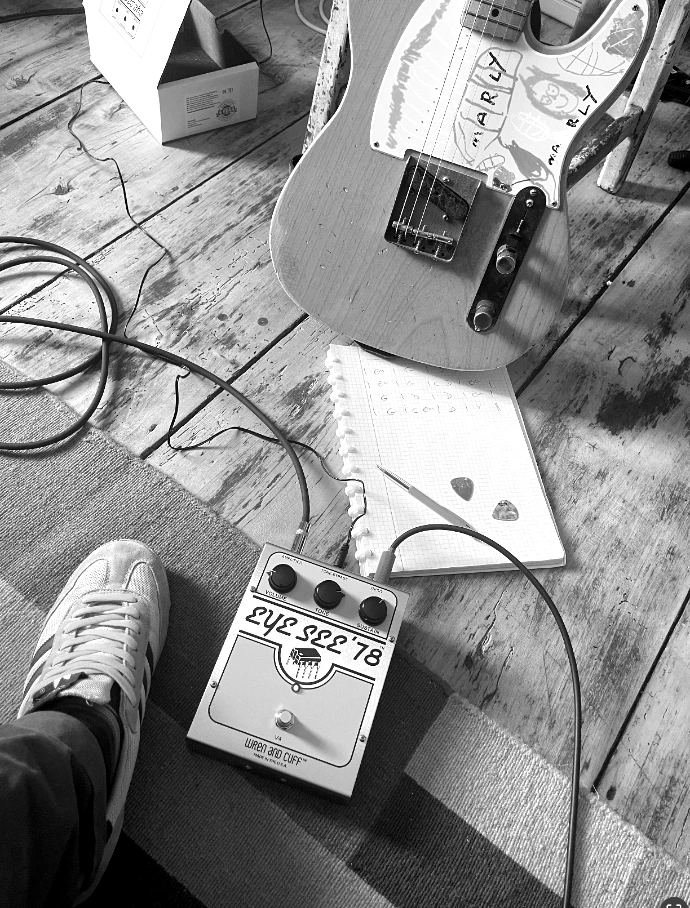
Choose a real pedal. Plug in a real cable. Turn real knobs. Get something that came from your hands and your room and the grain in the air that day. That's personal. That's cooked from scratch.
"Lost In Paradise" could not be made any other way.
Burning the Boats
In 1519, Hernán Cortés landed in Mexico with a small army. To ensure that no man, including himself, could choose retreat, he burned the fleet. The boats were gone. The only direction was forward.
That's the metaphor I kept coming back to throughout this entire production.
Every time I found a guitar tone I believed in, I committed to it. Immediately. Not "let me record a DI signal in parallel just in case." Not "I'll keep a dry track so I can reamp." No. The sound was decided at the microphone, in the room, with the amp. What you hear on the record is what came out of the speakers on the day.
Same with the bass. Same with the keyboards. Same with every arrangement choice.
And if something stopped feeling right? If the direction changed mid-production? I deleted everything and started over from zero. I restarted "Lost In Paradise" at least four times. Not four takes, four full restarts. Different direction, different energy, different approach. The song you'll hear in July 2026 is the fifth version.
Each time I started over, I burned the boats again.
That's not stubbornness. That's respect for the intention behind the music. And it's only possible when you're clear enough on what you want that you can recognize when something isn't it.
The Gear Discipline
Here's something people might not know about my studio: I have several dozen guitar amps. Between 60 and 80 effects pedals. Around ten guitars and basses.
That is a dangerous environment for someone trying to commit.
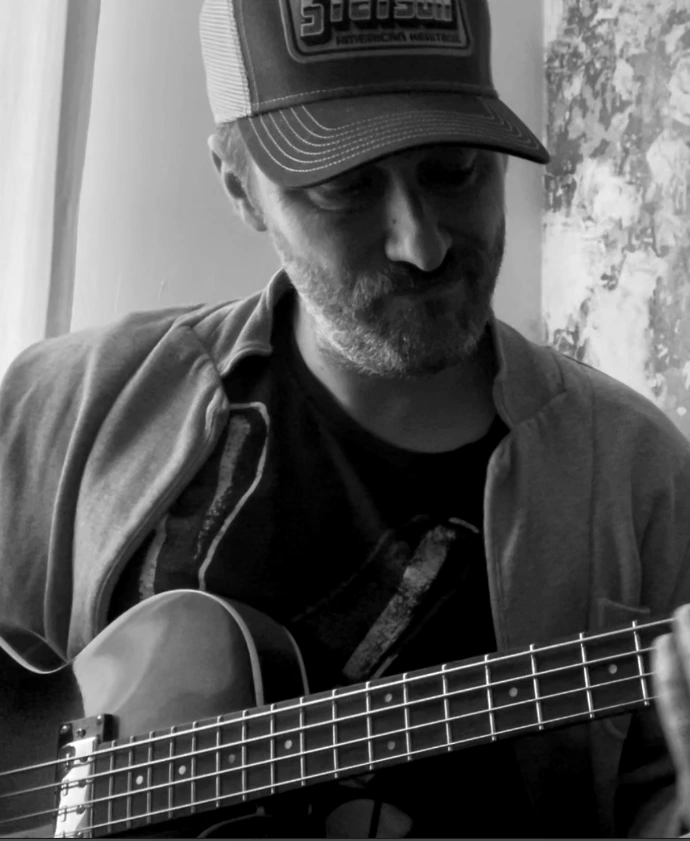
For "Lost In Paradise," I gave myself a rule before I touched a single cable: two amps, two guitars, one or two basses, and the minimum number of instruments that the song actually needed. That's it. Everything else stayed on the shelf.
This wasn't self-deprivation. It was clarity. Because I had already decided on the sonic direction, a 70s color, warm and present, with space and grain, I could look at everything I owned and say: those two pieces are the right tools for this job. And I never looked back.
The more I produce music, the more I approach it like cooking. I will almost never buy a pre-prepared sauce. I'd rather make my own, with chosen oils, the right herbs, specific spices that I've learned to trust. The process matters. The ingredients matter. What you put in is what you taste.
In music, I want that same organicism. And for "Lost In Paradise," it was taken as far as I could take it: 100% analog, from recording all the way through to mixing on a vintage Neve desk with outboard gear. No digital shortcut anywhere in the chain. (A full gear breakdown is coming in a separate post — there's a lot to say.)
If you want something tasty, rich, and warm, you need air. You need a room. You need good microphones. And you need the noise of heavy power transformers humming in the signal. That's where the character lives. That's what makes a recording feel like a place, not just a file.
It's like cooking with what you have in the fridge. You open the door, you look at what's there, and you make something good from that. You don't wait to order every possible ingredient before you decide what to cook. You work with what you have, you get creative with it and sometimes the constraint produces something better than anything a fully-stocked kitchen would have suggested.
When you know where you're going, choosing is easy. When you don't, you'll spend three days trying every pedal you own and still end up with a guitar tone that doesn't say anything.
The limitation didn't constrain the music. It freed me to focus on the music.
The Lesson, If You Want It
I'm not trying to tell you to go buy a Tascam 424. I'm not telling you to work with four tracks or refuse the conveniences of modern production. Use the tools you have.
But I will tell you this: the sound decisions happen at the microphone, not at the mix. And if you don't know what you want before you hit record, no plugin in the world will tell you.
The real work, the work that determines whether a record gets finished, whether it sounds like something, whether it means something happens before you open a session. It happens when you ask yourself: what is this? What color is it? What does it feel like at 2am when it's done? What doesn't belong anywhere near it?
Once you can answer those questions, the choices get easy. Once the choices get easy, the work gets fast. And once the work gets fast, you stop managing options and start making music.
Limit your choices upfront not because you have to, but because you decided to. Think hard about the direction before you start. What is the sonic identity of this song? What gear serves that identity? What would be noise?
Pick the right instruments. Commit to them. Follow your intention and your instinct in real time, not six sessions later when you're drowning in options.
Get the maximum out of what you selected. Then let it go.
That's what "Lost In Paradise" asked of me. That's what every song worth making will ask of you.
Why the 1978 Super 8 Footage Made Perfect Sense
When I chose the visual for the clip — 1978 Super 8 film footage — it wasn't a stylistic decision layered on top of the music. It was the same decision as everything else: it was the only logical choice once the intention was clear.
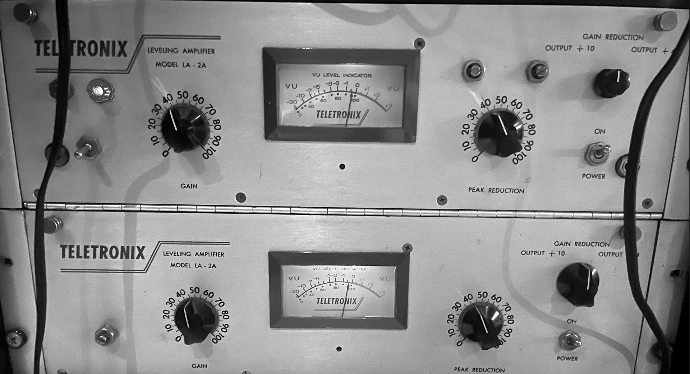
A Fender tweed amp. A Teletronix valve compressor. A V8 engine and the smell of petrol. Film grain catching light in a way no sensor ever will. These aren't aesthetic references — they're sensory evidence of an era. An era when we were happier with less. When time felt slower. When the warmth in a recording came from the actual warmth in the room.
The song and the footage breathe the same air. They were made for each other because they came from the same place.
Slow down. Take the time. Enjoy the ride.
Steev